











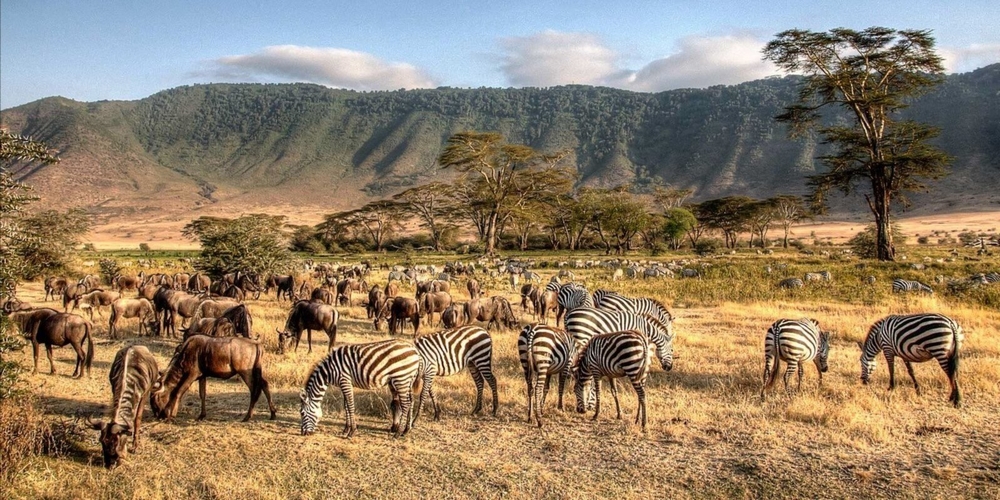
The Ngorongoro Conservation Area in northern Tanzania is one of Africa’s most remarkable destinations for wildlife watching. At its heart lies the Ngorongoro Crater, a vast volcanic caldera surrounded by steep walls and open grasslands. The unusual geography creates a rich ecosystem where large numbers of animals can be observed within a relatively compact area.
Animals of the Ngorongoro Crater
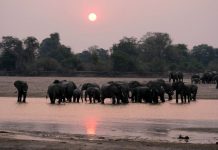
A safari inside the crater can reveal an impressive variety of African wildlife. Lions, elephants, buffaloes, zebras, wildebeest and hippos are among the animals frequently associated with the area. The crater is also one of the places where visitors have a chance of seeing the endangered black rhinoceros.
Birdwatchers will find plenty to enjoy as well. Flamingos and other waterbirds can gather around the crater’s lakes, while eagles, vultures and other species are often visible across the grasslands and surrounding hills.
Planning a Ngorongoro Safari
Wildlife watching in Ngorongoro is usually done with an experienced safari guide and a four-wheel-drive vehicle. Early morning is often an excellent time to explore, when temperatures are cooler and many animals are active.
The crater is only part of the experience. The surrounding conservation area contains Maasai communities, archaeological sites and spectacular highland landscapes. Travelers often combine Ngorongoro with Serengeti National Park and other northern Tanzanian destinations.
A visit should always follow local conservation rules. Keeping a safe distance from animals and remaining inside designated vehicles helps protect both wildlife and visitors while preserving this extraordinary environment for future generations.