




















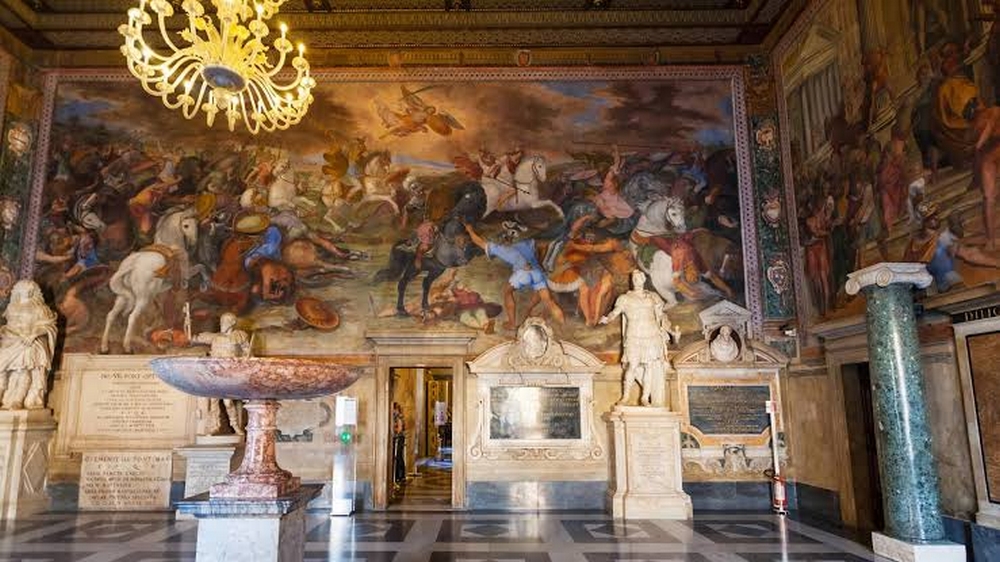
The Capitoline Museums are among the most important museums in Rome and are widely regarded as the world’s oldest public museums. Their origins date back to 1471, when Pope Sixtus IV donated an important collection of ancient bronze sculptures to the people of Rome. Today, the museums occupy several historic buildings around Piazza del Campidoglio, designed according to Michelangelo’s celebrated architectural plan.
Ancient Roman Treasures
The museums contain an extraordinary collection of Roman sculpture, inscriptions, mosaics and archaeological discoveries. One of the most famous works is the Capitoline Wolf, traditionally associated with the legendary founders of Rome, Romulus and Remus. Other highlights include the equestrian statue of Marcus Aurelius and the Dying Gaul.
The collections also contain important Greek sculptures and portraits of Roman emperors, providing an insight into the artistic traditions and political history of the ancient Mediterranean.
Palazzo dei Conservatori and Palazzo Nuovo
The museum complex includes Palazzo dei Conservatori and Palazzo Nuovo, connected by the underground Galleria Lapidaria. Visitors can also explore the Tabularium, which offers spectacular views towards the Roman Forum.
The Capitoline Museums are particularly rewarding for travellers interested in ancient Rome, archaeology and Renaissance architecture. Their central location makes them easy to combine with a visit to the Roman Forum, Piazza Venezia and other historic attractions in the heart of Rome.